
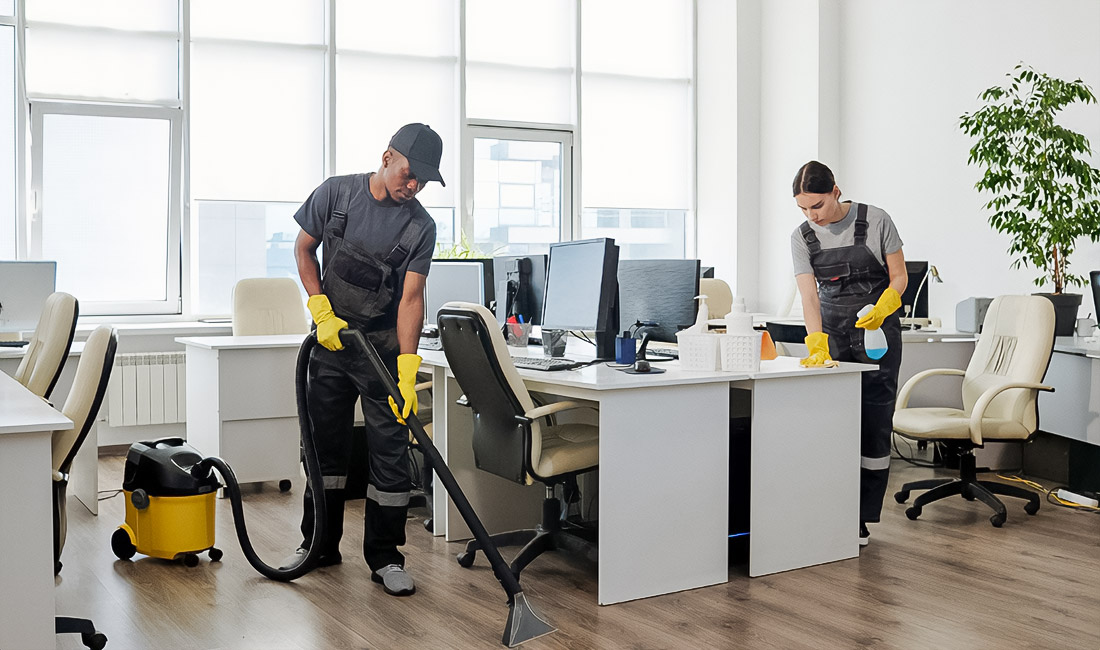
The weather is rarely predictable. Rain, high humidity, wet sidewalks, and short daylight hours dominate much of the year, quietly shaping daily routines.In England, these conditions don’t stop at the threshold—they seep indoors, subtly transforming familiar office environments into high-risk spaces. If you want this to lean more toward workplace safety, building materials, or facility management, I can adjust the framing.
Employees expect the workspace to be safe, clean, and functional. Not perfectly sterile, but well maintained. It is this stability that builds trust in the work environment and reduces stress in daily work. In hybrid work and hot desking environments, cleanliness ceases to be a background and becomes part of the corporate norm, reinforced through commercial office cleaning standards that support shared responsibility.
British Office Culture And Attitude To Cleanliness

English work culture is based on the principles of respect for borders and common rules. This is directly reflected in the attitude towards the clean desk and clear desk policy. The workplace is not considered personal territory forever, especially with desk sharing. It is temporary, which means it should be left in a state convenient for the next person.
In shared spaces, special attention is paid to high-touch surfaces. Keyboards, computer mice, door handles, tables in meeting rooms and kitchen areas are considered as a common responsibility. It is no coincidence that in such offices strict cleaning routines are perceived not as control, but as caring for employees.
The facts confirm this logic. In workspaces with hot desks, microbiological activity is 18% higher than in offices with fixed desks. General computer mice show 41% higher pollution levels than personal mice. For the British approach to employee health, such figures are a sufficient argument in favor of regular disinfection.
Cleanliness As A Factor Of Health And Concentration

The understanding has long been established in English offices that cleanliness is directly related to productivity. A cluttered workspace is perceived as a source of unnecessary stress. It makes it difficult to concentrate, slows down work, and increases fatigue.
Research shows that clutter can reduce concentration by about 20–25%. Therefore, a clean desk in the UK is not a requirement for the sake of appearance, but a way to maintain focus and mental wellbeing. When the desk is cleared of unnecessary items, the employee gets into the work rhythm faster and is less distracted by visual noise.
The issue of health is equally important. Contaminated surfaces and poor hygiene increase the spread of pathogens. This is reflected in sick days and leads to presenteeism, when a person comes to the office but works inefficiently. On average, one employee loses about 50 days of productivity per year due to health problems, and about 8 of them are formal sick leave.
Hybrid Work, Cleaning Schedules, And Economic Impact
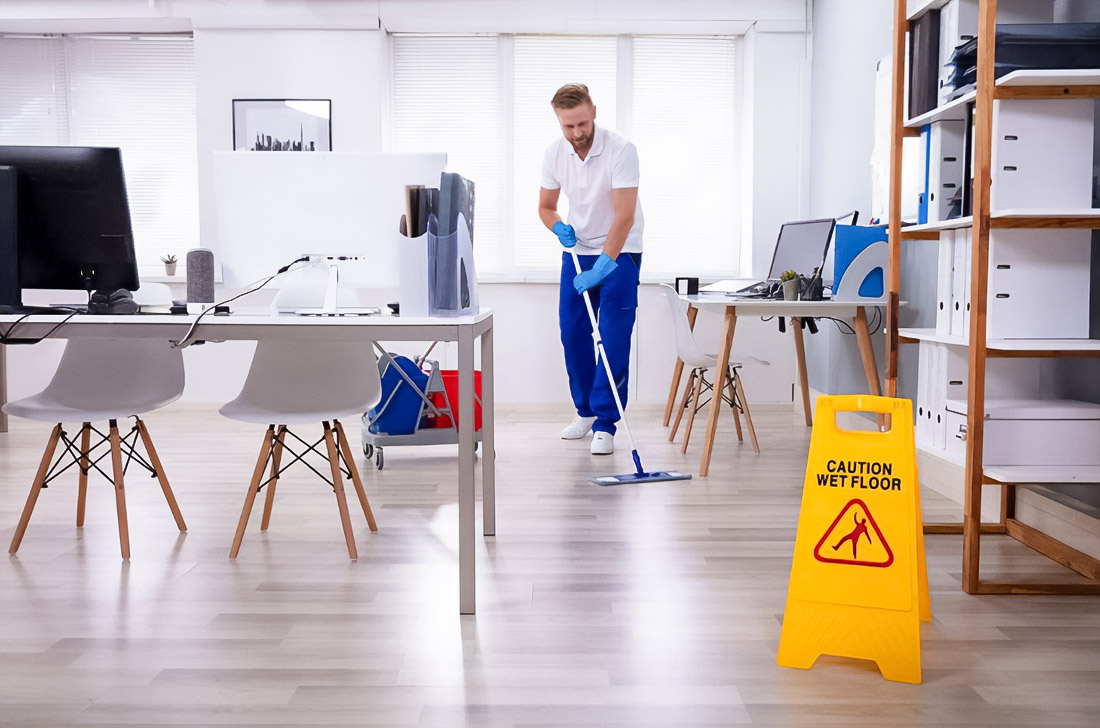
Hybrid work in England has changed the approach to the cleaning schedule. Offices are no longer filling up evenly. There are peak attendance days, most often in the middle of the week, when shared desks, meeting rooms and kitchens are used as actively as possible. Universal cleaning schedules do not work in such conditions.
An effective office cleaning strategy takes into account real-world space usage patterns. Daily cleaning is applied to high-touch surfaces, weekly cleaning maintains the overall condition of the office, and monthly cleaning and deep cleaning prevent the accumulation of impurities. This approach reduces the risk of diseases and maintains stable productivity.
The economic effect is obvious. Unplanned absences of employees can reduce office productivity by up to 40%. At the same time, about 60% of the working time is spent on communication, and the absence of key participants in the processes dramatically increases the burden on the team. A clean and well-maintained workplace helps to reduce these losses.
In the English working culture, office cleanliness is part of the systematic management of the environment. It supports health, improves concentration and creates conditions in which employees can work stably, without unnecessary stress. That is why cleanliness is considered here not as a service, but as an element of sustainable business operation.
Leave a Reply